


As GOP Revives Threat of Shariah, Muslims Call Campaign a Political Gambit
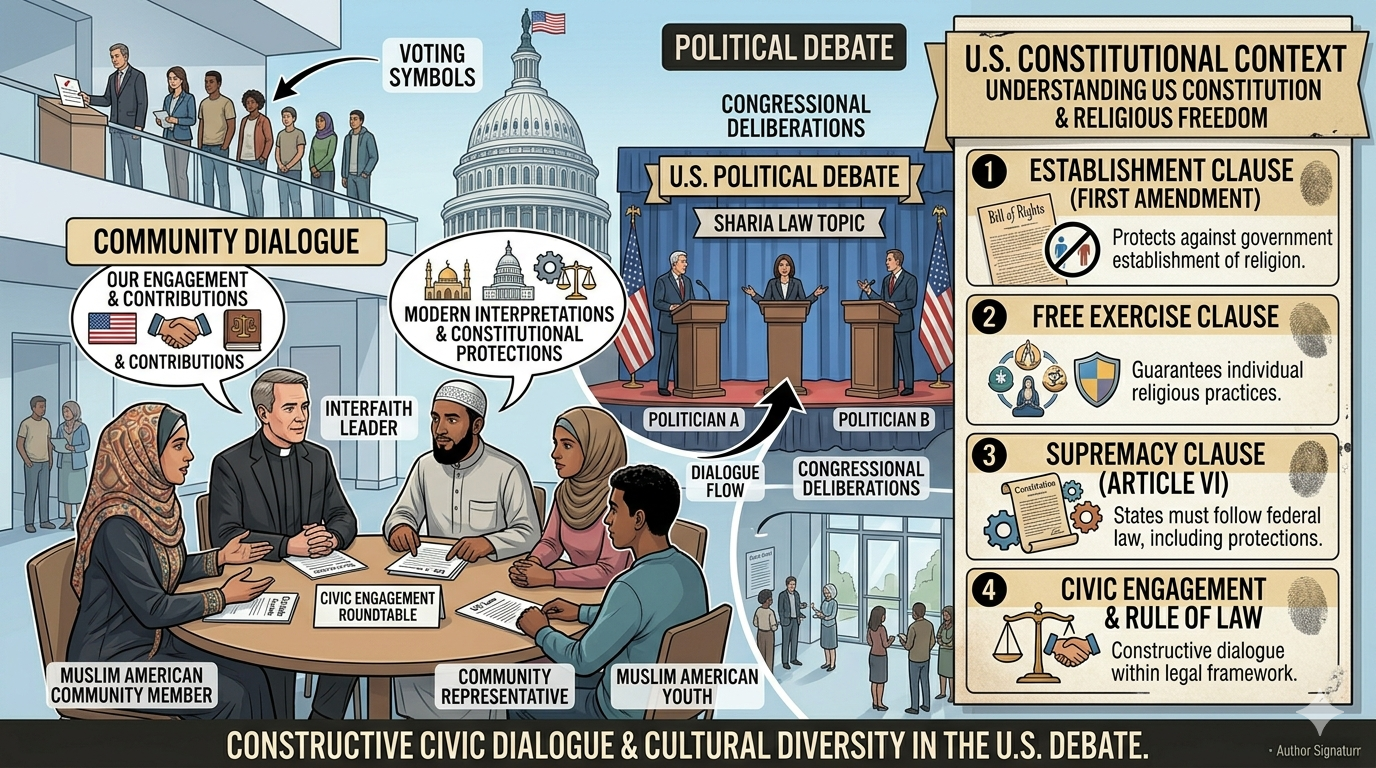
In the lead-up to the 2026 midterm elections, a renewed focus on Shariah law in American political discourse has drawn widespread attention and controversy. Some Republican lawmakers have revived warnings about the supposed threat of Shariah law, framing it as incompatible with American legal and cultural values. This rhetoric has sparked a debate about religious freedom, political strategy, and the role of Muslim Americans in society. Critics argue that this campaign is less about legal concerns and more about appealing to voters through fear and cultural anxiety.
Shariah, in Islamic tradition, refers broadly to moral and ethical principles derived from the Quran and the teachings of the Prophet Muhammad. It encompasses guidance on personal behavior, community responsibilities, and religious practices. In many Muslim-majority countries, elements of Shariah are incorporated into local legal systems, but interpretations vary widely. In the United States, however, Shariah law has no legal standing, and U.S. courts are guided solely by the Constitution and statutory law.
Despite this, several politicians have recently introduced or promoted legislation aimed at preventing any influence of Shariah law within the U.S. legal system. These measures, often labeled as “No Shariah” initiatives, are largely symbolic because the Constitution already prohibits the enforcement of foreign or religious laws that conflict with American law. Critics argue that these campaigns are designed to stoke fear of Muslims for political gain rather than address a genuine legal issue.
Political Context and Rhetoric
The renewed focus on Shariah comes amidst a highly polarized political environment. Certain politicians have portrayed Islam and Muslim communities as threats to American values, sometimes using inflammatory statements to gain attention. These claims often exaggerate the influence of Shariah or misrepresent its role in American Muslim life. Such rhetoric has raised concerns among civil rights organizations, faith leaders, and interfaith coalitions, who warn that it can lead to discrimination, social division, and an increase in Islamophobia.
Critics also highlight that similar narratives have appeared during past election cycles, particularly in times of geopolitical tension or social uncertainty. Targeting Shariah law as a perceived threat serves as a political tool to mobilize certain voter bases by framing complex legal and social issues in stark, fear-based terms.
Muslim and Interfaith Responses
Muslim advocacy groups, alongside interfaith allies, have strongly condemned the anti-Shariah rhetoric. Leaders emphasize that the overwhelming majority of American Muslims live law-abiding lives, contribute positively to their communities, and follow the same legal obligations as any other citizen. They assert that portraying Islam or Muslim communities as a legal or social threat is misleading and harmful.
Interfaith coalitions have called on politicians to engage in responsible discourse that respects constitutional principles and the diversity of American society. They argue that fear-based campaigns targeting minority communities undermine social cohesion and distract from substantive policy debates that impact all Americans. Religious leaders stress the importance of promoting understanding and cooperation between different faith groups, rather than exploiting cultural or religious differences for political purposes.
Why Shariah Is Misunderstood
A central reason this debate persists is that Shariah is widely misunderstood. While some interpretations of Shariah inform legal practices in certain countries, in most contexts it serves as a personal moral and ethical guide. In the U.S., adherence to Shariah is a personal choice and has no bearing on public law. Legal experts consistently affirm that American courts and government institutions operate independently of any religious law, making the notion of a Shariah “threat” largely symbolic.
The focus on Shariah also intersects with broader concerns about Islamophobia, prejudice, and the social integration of Muslim communities. Studies indicate that fear of Shariah can heighten anti-Muslim sentiment, increase discriminatory practices, and contribute to the marginalization of Muslim citizens. Many civil rights advocates argue that political campaigns emphasizing Shariah law risk reinforcing negative stereotypes and perpetuating social divisions.
Implications for American Society
The resurgence of Shariah-focused political rhetoric has several implications. First, it can create an environment of distrust and anxiety among Muslim Americans, impacting their sense of security and inclusion in society. Second, it diverts public attention from substantive policy discussions, such as economic development, healthcare, education, and social welfare, toward symbolic or culturally charged debates. Third, it may embolden extremist groups or individuals with prejudiced views, potentially increasing social tensions.
Conversely, the widespread pushback from Muslim and interfaith communities highlights the resilience and active participation of minority groups in American civic life. Advocacy, education, and public engagement are key tools in countering misinformation and promoting constructive dialogue about religion, law, and society.
Frequently Asked Questions (FAQs)
Q1: What is Shariah law?
A: Shariah is a set of moral and ethical principles in Islam, derived from the Quran and the teachings of the Prophet Muhammad. It covers personal behavior, community responsibilities, and religious practices, and interpretations vary widely among Muslims.
Q2: Does Shariah law have any legal authority in the United States?
A: No. U.S. law is based on the Constitution and statutory law. Courts do not apply Shariah as legal authority, and any foreign or religious law conflicting with the Constitution cannot be enforced.
Q3: Why are some American politicians concerned about Shariah?
A: Some politicians claim Shariah is a threat to U.S. legal and cultural values, often using this narrative to appeal to certain voter groups. Critics say these claims are largely symbolic and politically motivated rather than legally grounded.
Q4: How do Muslim Americans respond to these claims?
A: Muslim Americans, along with interfaith allies, emphasize that such rhetoric is misleading and fosters discrimination. They advocate for respect, understanding, and constitutional protections for all religious groups.
Q5: What is the impact of anti-Shariah rhetoric on society?
A: It can increase Islamophobia, marginalize Muslim communities, create fear, and distract from broader policy issues. Constructive dialogue and education are essential to counter these negative effects.
Q6: Are there laws in the U.S. that already prevent foreign religious laws from affecting citizens?
A: Yes. The U.S. Constitution ensures the separation of church and state and protects individuals from the enforcement of foreign religious laws that conflict with constitutional rights.
Take the Next Step with LearnMuslim
Ready to go beyond just reading about Islam and truly understand it with proper guidance?
LearnMuslim makes it easy for both kids and adults to connect deeply with the Quran through personalized one-on-one online classes. With flexible timings and qualified tutors, you can learn at your own pace from the comfort of your home. Whether your goal is to perfect Quran recitation with Tajweed, start with Noorani Qaida, or begin your memorization journey, LearnMuslim provides a supportive and structured learning experience. Female instructors are available, and you can begin your journey today with a free trial
Explore LearnMuslim’s courses and begin your free trial today:
Learn Quran with Tajweed
Noorani Qaida
Quran Memorization and more at LearnMuslim.

