

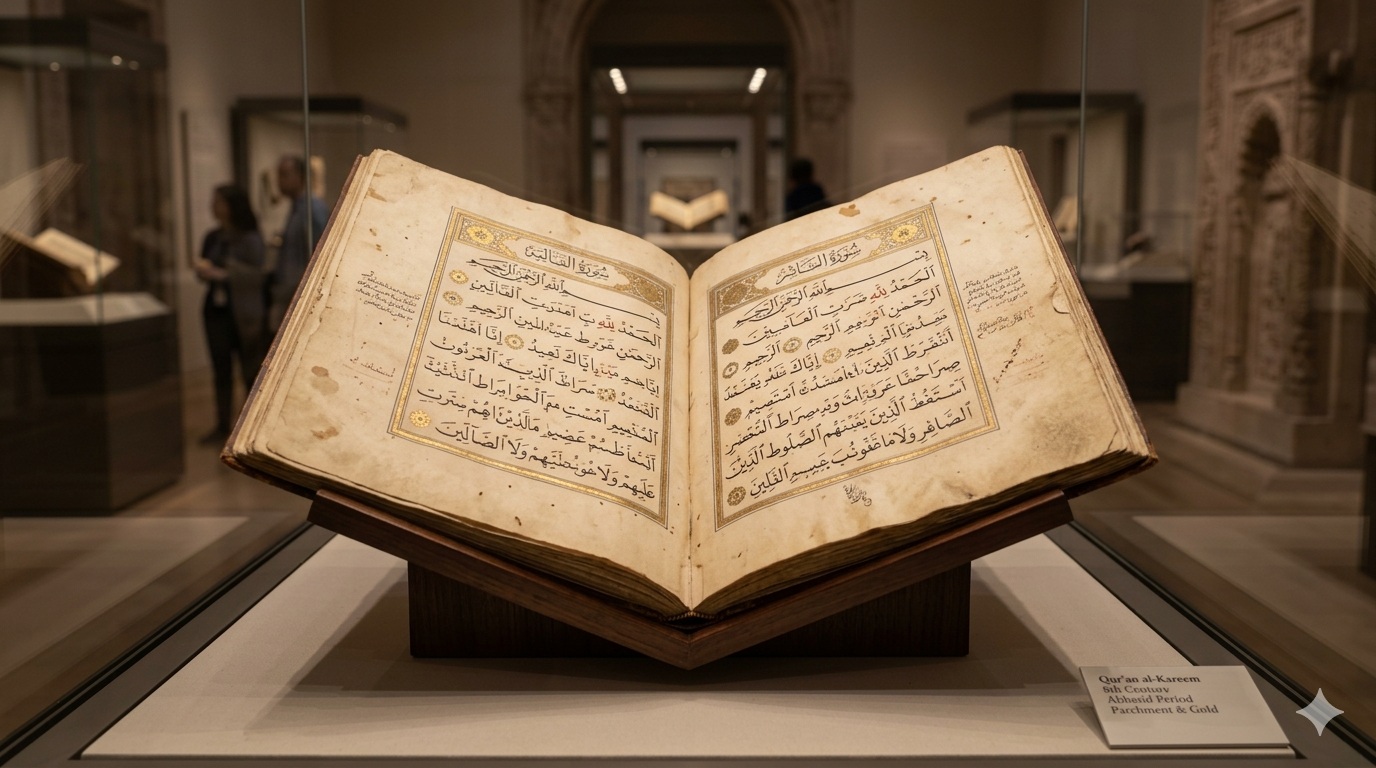
Historic Qur’an Highlights Artistic Heritage in Makka
Introduction
Makkah’s rich cultural and religious heritage is highlighted through a historic Qur’an that not only holds spiritual significance but also showcases extraordinary artistic craftsmanship. This unique Qur’anic manuscript is part of the collection at the Holy Qur’an Museum in the Hira Cultural District, a center dedicated to celebrating Islamic heritage, artistry, and the historical evolution of Qur’anic writing.
The Historic Qur’an: A Masterpiece of Calligraphy
At the heart of this cultural celebration is a rare Qur’anic copy distinguished by its artistic form and historical age. Crafted in the shape of a ship, this manuscript reflects an advanced level of creativity and skill in Islamic calligraphy, combining spiritual devotion with detailed visual beauty. The artifact is estimated to date back to the 5th century AH (11th century CE), representing centuries-old mastery in Qur’anic ornamentation.
The manuscript’s calligraphy bears the traces of time—its letters have faded and changed color from their original black to brown hues due to age, revealing the passage of centuries. Later additions, such as red diacritical markings, were included to clarify recitation, demonstrating the ongoing efforts of Muslims through time to preserve and assist in understanding the sacred text.
The Holy Qur’an Museum and Its Role
The Holy Qur’an Museum is part of the broader Hira Cultural District, which celebrates Islamic history, learning, and culture as integral elements of the identity of Makkah, the holiest city in Islam. The museum’s mission includes safeguarding rare Qur’anic manuscripts and making them accessible to researchers, educators, and visitors interested in the richness of Islamic artistic and spiritual traditions.
As part of its preservation efforts, the museum collaborates with institutions that specialize in protecting and restoring fragile manuscripts. These partnerships help ensure that rare Qur’anic artifacts are maintained for future generations while also being studied to reveal insights into historical techniques of calligraphy and manuscript production.
Artistic Significance Through the Ages
Islamic calligraphy has long been considered one of the highest artistic achievements within Muslim cultures. From early Kufic scripts to later ornamental forms such as Thuluth and Naskh, the art of script was intertwined with devotion to the Qur’an itself. Manuscripts were often decorated with intricate geometric patterns, floral motifs, and vibrant colors that served both aesthetic and spiritual purposes.
The historic Qur’an on display in Makkah exemplifies this tradition. Its unique form—written in the shape of a ship—symbolizes more than artistic experimentation. It reflects the deep reverence for the sacred text and the cultural emphasis placed on preserving both the meaning and visual beauty of the Qur’an.
Preserving Religious and Cultural Heritage
The display of such manuscripts contributes significantly to the understanding of Islamic heritage. By showcasing ancient Qur’ans, the museum highlights the link between faith, history, and art. Visitors gain insight not only into religious devotion but also into centuries of craftsmanship, illustrating how Islamic societies valued both textual accuracy and visual elegance.
The preservation and presentation of these manuscripts encourage cultural appreciation and awareness, ensuring that future generations recognize the richness of Islamic artistry and the historical context of sacred texts.
Impact on Scholars and Enthusiasts
For researchers, students, and enthusiasts of Islamic art and history, access to historic Qur’ans provides a valuable learning resource. Scholars can study the evolution of calligraphy, materials used, and techniques applied across different periods. This aids in understanding the broader cultural and historical context of the Islamic world.
Visitors, meanwhile, are offered an immersive experience that connects them with centuries-old traditions, enhancing appreciation for the care, skill, and devotion involved in creating these sacred works.
Conclusion
The historic Qur’an in Makkah stands as a testament to the city’s rich artistic and religious legacy. By combining spiritual significance with extraordinary craftsmanship, it highlights the intricate relationship between faith and art in Islamic culture. The Holy Qur’an Museum continues to play a vital role in preserving these treasures, allowing both scholars and the general public to explore and celebrate the depth of Islamic artistic heritage.
FAQs
1. Where is the historic Qur’an displayed?
It is displayed at the Holy Qur’an Museum in the Hira Cultural District in Makkah.
2. How old is the manuscript?
The manuscript dates back to approximately the 5th century AH (11th century CE).
3. What is unique about this Qur’an?
It is crafted in the shape of a ship and features centuries-old calligraphy with both black and red diacritical markings.
4. Why is the Holy Qur’an Museum important?
The museum preserves rare Qur’anic manuscripts and highlights Islamic artistic and cultural heritage.
Take the Next Step with LearnMuslim
Ready to go beyond just reading about Islam and truly understand it with proper guidance?
LearnMuslim makes it easy for both kids and adults to connect deeply with the Quran through personalized one-on-one online classes. With flexible timings and qualified tutors, you can learn at your own pace from the comfort of your home. Whether your goal is to perfect Quran recitation with Tajweed, start with Noorani Qaida, or begin your memorization journey, LearnMuslim provides a supportive and structured learning experience. Female instructors are available, and you can begin your journey today with a free trial
Explore LearnMuslim’s courses and begin your free trial today:
Learn Quran with Tajweed
Noorani Qaida
Quran Memorization and more at LearnMuslim