

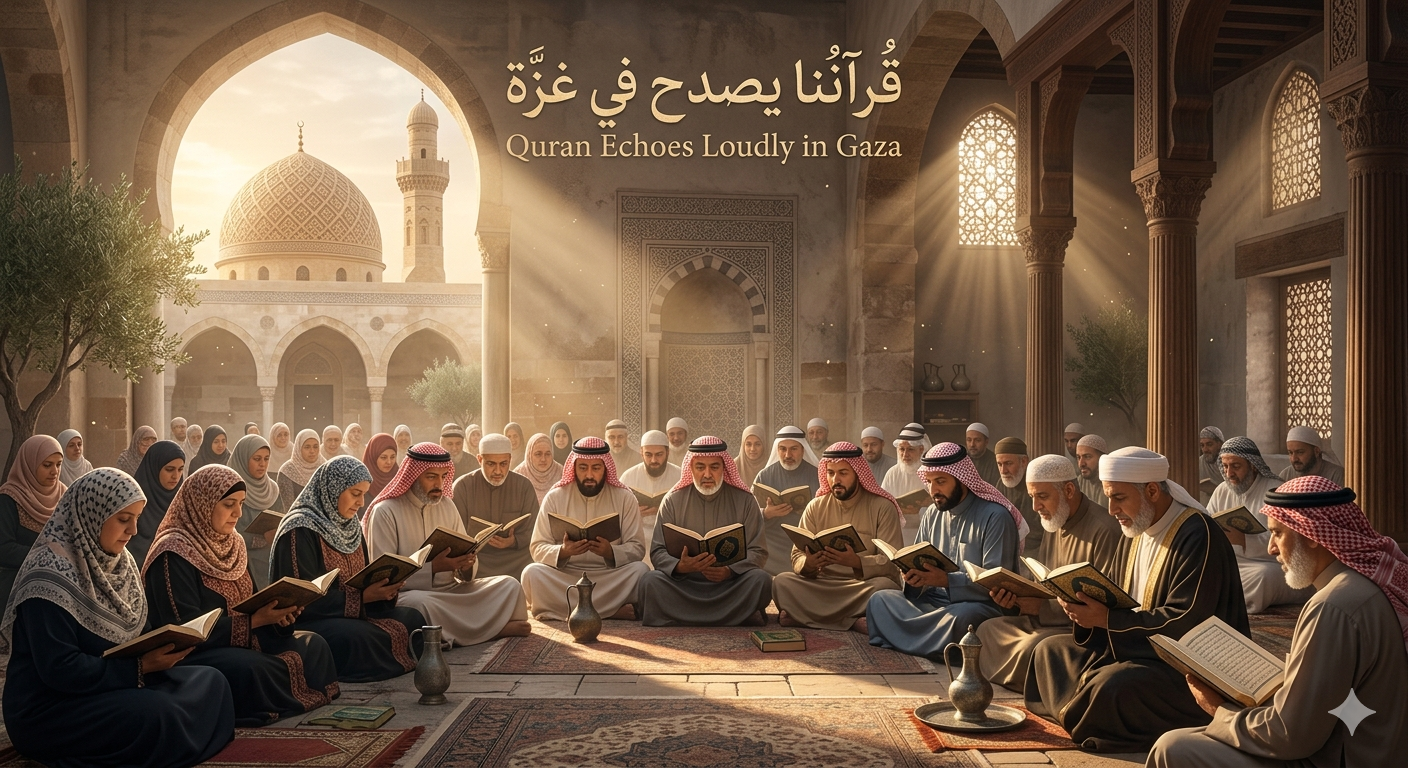
Quran Echoes Loudly as Palestinian Reciters Gather in Gaza
In the heart of Gaza, a powerful and moving scene unfolds as Palestinian reciters gather to perform the Quran, filling streets and mosques with the resonant sound of sacred verses. This gathering is more than a religious ritual; it is a demonstration of faith, resilience, and cultural identity in a region long marked by conflict and hardship.
A Celebration of Faith and Tradition
The Quran, the holy book of Islam, holds a central place in Palestinian life. Recitation, or Tilawah, is not only an act of devotion but also a way to preserve spiritual and cultural traditions. In Gaza, groups of reciters of all ages convene in mosques and public spaces, creating a powerful echo that reverberates throughout neighborhoods. The event brings together both professional reciters and community participants, fostering a sense of unity and collective devotion.
Participants often engage in intricate recitation styles, combining melody, rhythm, and intonation to highlight the beauty and depth of the Quranic text. These gatherings allow young Palestinians to learn from experienced reciters, ensuring that the tradition of Quranic recitation continues to thrive despite the challenges of daily life in Gaza.
The Role of the Quran in Palestinian Life
In Gaza, where political instability, economic hardship, and frequent conflict shape everyday life, the Quran serves as a source of comfort and guidance. Recitation events like these provide moments of peace and reflection, helping communities connect spiritually and emotionally. The echoing voices of reciters remind listeners of shared heritage, values, and resilience.
Such gatherings also highlight the importance of education and mentorship. Experienced reciters teach younger generations proper pronunciation, rhythm, and interpretation, preserving the nuances of Quranic language and fostering a lifelong respect for the holy text.
Cultural and Social Significance
Beyond its religious role, Quranic recitation in Gaza is a deeply cultural experience. The practice reinforces community bonds, as families and neighbors come together to listen, learn, and participate. The collective recitation transforms public spaces into centers of spiritual and cultural activity, reinforcing identity in the midst of adversity.
The event also attracts attention from other parts of Palestine and the wider Arab world. Videos and recordings of Gaza’s recitation gatherings circulate online, inspiring people across the region to engage with the Quran and celebrate Palestinian heritage. These gatherings exemplify how faith and culture can thrive even under difficult circumstances.
Challenges and Resilience
Organizing large-scale recitation events in Gaza is not without challenges. The region faces political instability, restrictions on movement, and frequent power outages. Despite these obstacles, local organizers and communities ensure that these gatherings take place safely and meaningfully, often improvising solutions to maintain continuity.
The perseverance of Palestinian reciters underscores the resilience of the population. By continuing to honor their spiritual traditions, they demonstrate that faith, culture, and education can persist even amid hardship, providing a source of strength and hope for all who participate.
Inspiring the Next Generation
One of the most significant outcomes of these gatherings is the impact on youth. Young Palestinians witness firsthand the dedication of seasoned reciters, inspiring them to pursue Quranic studies and participate in recitation themselves. Mentorship programs often accompany these events, pairing young learners with experienced reciters who guide them in pronunciation, intonation, and memorization.
This educational aspect ensures that the art of Quranic recitation is not lost and strengthens the intergenerational transmission of faith, knowledge, and cultural identity.
FAQs
Q1: What is Quranic recitation?
Quranic recitation, or Tilawah, is the practice of reading the Quran aloud with proper pronunciation, rhythm, and intonation. It is both a spiritual and cultural practice in Islam.
Q2: Why is Quranic recitation significant in Gaza?
In Gaza, recitation serves as a source of spiritual comfort, cultural preservation, and community unity, particularly in a region affected by conflict and hardship.
Q3: Who participates in these recitation gatherings?
Participants include professional reciters, community members of all ages, and young learners who are guided by experienced mentors.
Q4: How do these gatherings impact the community?
They strengthen social bonds, foster cultural identity, inspire youth, and provide moments of peace and reflection amid daily challenges.
Q5: Are these recitations shared beyond Gaza?
Yes, recordings and videos often circulate online, inspiring broader audiences in Palestine and across the Arab world.
Take the Next Step with LearnMuslim
Ready to go beyond just reading about Islam and truly understand it with proper guidance?
LearnMuslim makes it easy for both kids and adults to connect deeply with the Quran through personalized one-on-one online classes. With flexible timings and qualified tutors, you can learn at your own pace from the comfort of your home. Whether your goal is to perfect Quran recitation with Tajweed, start with Noorani Qaida, or begin your memorization journey, LearnMuslim provides a supportive and structured learning experience. Female instructors are available, and you can begin your journey today with a free trial
Explore LearnMuslim’s courses and begin your free trial today:
Learn Quran with Tajweed
Noorani Qaida
Quran Memorization and more at LearnMuslim